Quiet Skies Act: Congress Pushes DOT to Enforce Inflight Call Ban
Lawmakers reintroduce legislation to ban voice calls on planes, aiming to close a regulatory loophole that has kept the 2018 prohibition unenforced for years.
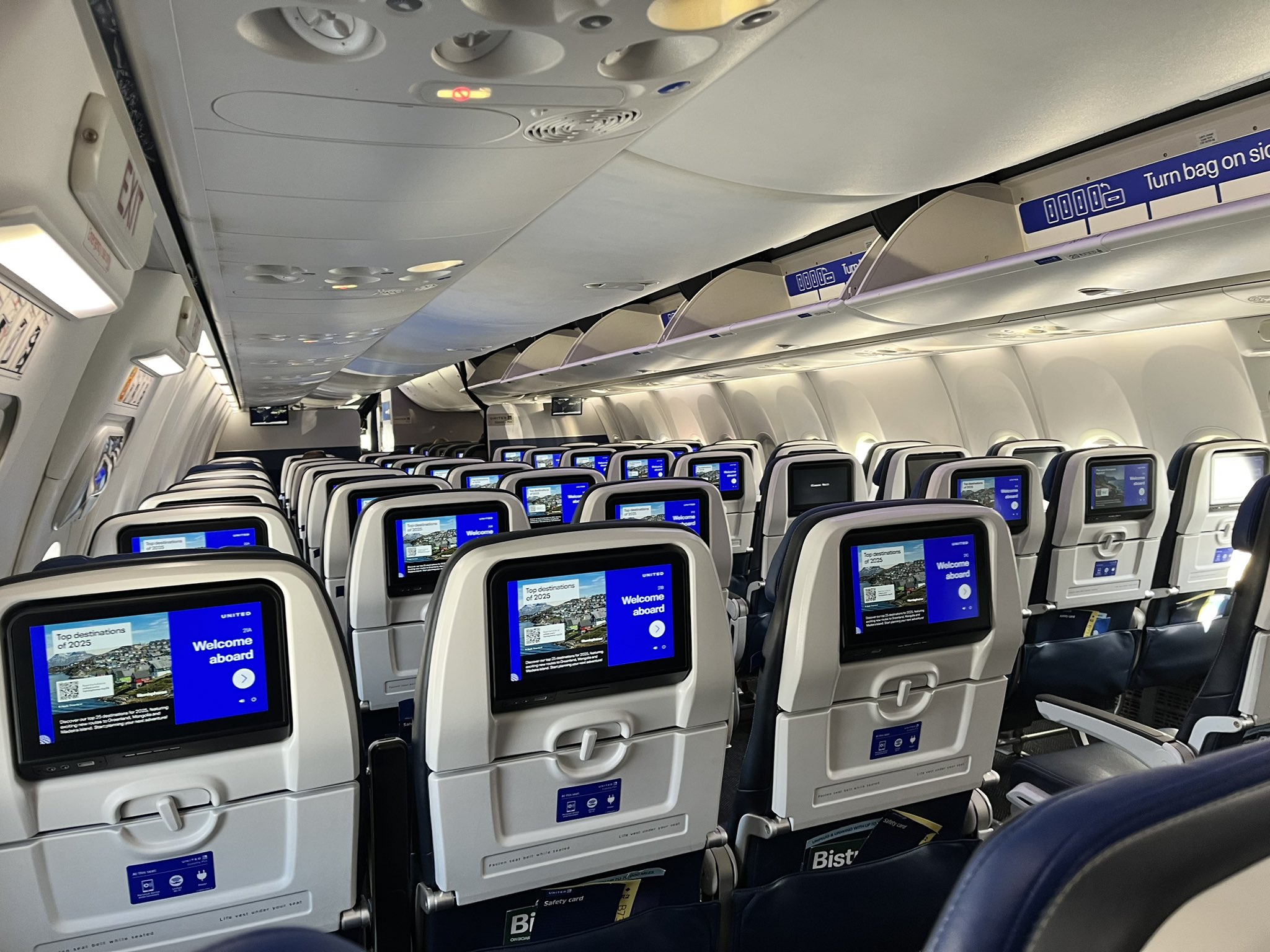
Image via View from the Wing
Key takeaways
- Congress passed a ban on inflight voice calls in 2018, but the Department of Transportation never issued a final rule to enforce it.
- The Quiet Skies Act, reintroduced in 2025, would require the DOT to complete the rulemaking process within 90 days.
- The legislation targets all voice calls, including those made via Wi-Fi and cellular networks, but exempts calls made for safety or emergency purposes.
- Airlines would be required to notify passengers of the ban before boarding and during flights.
- The push comes as faster onboard Wi-Fi makes voice calls and virtual meetings more technically feasible, raising questions about passenger comfort and cabin noise.
Nearly seven years after Congress voted to ban voice calls on commercial flights, the rule remains unenforced — and lawmakers are running out of patience.
The Quiet Skies Act, reintroduced in early 2025, would force the Department of Transportation (DOT) to finally implement a 2018 prohibition on inflight voice calls. The legislation, which has bipartisan support, gives the DOT 90 days to complete rulemaking and begin enforcement, closing a regulatory gap that has left passengers in a legal gray zone.
Why the Inflight Call Ban Hasn't Been Enforced
The original ban, passed as part of the FAA Reauthorization Act of 2018, prohibited airlines from allowing voice calls on flights — including calls made via Wi-Fi or onboard cellular networks. The intent was clear: lawmakers wanted to preserve a quiet cabin environment and prevent the social friction that phone conversations can cause in close quarters.
However, the DOT never issued a final rule to enforce the ban. The agency opened a comment period in 2019, receiving over 3,000 responses — the majority of which opposed allowing calls — but never moved to finalize the regulation. This left the prohibition technically in law but practically unenforceable, as airlines were not required to implement or police it.
Meanwhile, technology moved ahead. Airlines have been steadily upgrading onboard Wi-Fi, with many now offering enough bandwidth for streaming, video calls, and voice apps like WhatsApp or FaceTime. Delta Air Lines, for example, has installed gate-to-gate Wi-Fi on most of its fleet, and other carriers are following suit. This has made the prospect of widespread inflight calling more real than ever — and, for many passengers, more annoying.
What the Quiet Skies Act Would Do
The Quiet Skies Act is designed to cut through the regulatory inertia. Key provisions include:
- Mandatory rulemaking: The DOT must publish a final rule within 90 days of the bill's enactment, effectively forcing the agency to act where it has hesitated.
- Clear prohibition: The rule would ban all voice calls on commercial flights, whether made over cellular networks, satellite Wi-Fi, or any other technology.
- Passenger notification: Airlines would be required to inform passengers of the ban before boarding and during the flight, likely through announcements and signage.
- Exemptions: Calls made for safety or emergency purposes, or by law enforcement or flight crew performing their duties, would be permitted.
Notably, the bill does not directly impose fines on passengers who make calls. Instead, it targets the airlines: carriers that fail to enforce the ban could face DOT penalties. How airlines would practically enforce the rule — for example, whether flight attendants would be expected to ask passengers to hang up — remains an open question.
What It Means for Travelers
For most passengers, the Quiet Skies Act is good news. Surveys consistently show that an overwhelming majority of air travelers oppose inflight voice calls, citing noise, privacy concerns, and the confined nature of airplane cabins. Even as onboard Wi-Fi improves, the social norm has remained: headphones are fine; loud conversations are not.
However, the bill does not address other forms of noise — crying babies, loud conversations between seatmates, or passengers who play audio without headphones. It also does not ban text messaging, which remains permitted under the 2018 law and is widely viewed as less disruptive.
For business travelers who rely on inflight connectivity to attend virtual meetings, the ban could be a frustration. Some airlines have begun offering Wi-Fi tiers optimized for video conferencing, and the Quiet Skies Act would effectively prevent passengers from speaking during those calls. The bill does, however, permit passengers to listen to audio or watch video without speaking, as long as they use headphones.
The Future of Inflight Connectivity
The Quiet Skies Act highlights a larger tension in air travel: as technology enables more productivity and entertainment at 35,000 feet, how should airlines balance passenger comfort with connectivity?
Airlines themselves have been cautious. Most major US carriers — including American, Delta, United, and Southwest — have voluntarily prohibited voice calls on their flights for years, even without a DOT rule. They have cited customer preference as the reason. Some international carriers, such as Emirates and Qantas, allow voice calls on select flights, but the practice remains rare and often limited to premium cabins.
The bill's reintroduction comes at a time when the FAA is also considering broader rules around electronic device use on planes. The Quiet Skies Act, if passed, would settle at least one piece of the puzzle: voice calls are not coming to US commercial aviation anytime soon.
Next Steps
The Quiet Skies Act has been referred to committee in both the House and Senate. Given the bipartisan support and the simple goal of enforcing an existing law, the bill has a reasonable chance of passage. If enacted, travelers can expect the DOT to issue a final rule within months, followed by updated airline policies and passenger notifications.
For now, the best advice for passengers is the same as it has been: use your devices freely, but keep conversations brief and quiet — or better yet, save them for the ground.
Frequently asked questions
Is it currently legal to make voice calls on a plane?
Technically, no — Congress banned inflight voice calls in 2018. However, the DOT never issued a final rule to enforce the ban, so airlines are not required to prohibit calls. Most major US carriers voluntarily ban voice calls anyway.
What is the Quiet Skies Act?
The Quiet Skies Act is a bill reintroduced in 2025 that would force the DOT to finalize and enforce the 2018 ban on inflight voice calls within 90 days. It targets airlines, requiring them to notify passengers and enforce the prohibition.
Will the Quiet Skies Act ban texting on planes?
No. The bill only prohibits voice calls. Text messaging, email, and other non-voice communications remain permitted under the 2018 law and would not be affected.
Can I use video call apps like FaceTime or Zoom on a plane?
Under the Quiet Skies Act, you could use these apps to listen or watch, but you would not be allowed to speak. Voice calls — whether over traditional phone networks, Wi-Fi, or apps — would be banned.
What happens if an airline doesn't enforce the ban?
The DOT could impose penalties on the airline, though the exact fines would be determined during the rulemaking process. Passengers who make calls would not face direct fines under the proposed bill.
Sources
This article was synthesised and fact-checked from the following reporting: